
Leading Nations to the stratosphere of their potential through projects of economic sustainability and equipping. Swinging the pendulum towards prosperity for all.

Municipal Water Distribution Systems
The Gambia, West Africa
.jpeg)
The United States Council on Global Development (USCGD), a global, humanitarian consulting group, was approached in early 2021 by The National Disaster Management Agency (NDMA) of The Gambia (Gambia) to pursue the means, methods and funding for the design and implementation of 10 potable water wells to be strategically located over their country’s 5 inhabited regions, or states, at an allocation ratio of 2 wells per region. This series of well system projects is being implemented in partnership with national and local governments within The Gambia, with the use of local contractors, and the first of which well projects was successfully funded and completed in late 2022.
The three specific objectives that this collaborative effort between the USCGD and NDMA are seeking to resolve are simple:
-
Provide water capable of being consumed by humans that is pumped to the surface from underground aquifers using a solar powered system.
-
To mitigate and or dismiss the contamination of water and decrease disease by water born sources.
-
To provide a multi-generational, sustainable means to draw up and distribute potable water.
The typical source of potable water (laboratory tested to be consumable by humans) in the remote areas of Gambia is derived mainly by rainwater collection and storage during the rainy season from May/June through late September and into October. The water falls in abundance into concrete lined, subterraneous cisterns where it is drawn up daily for consumption by all those who have the capability of accessing the stored rainwater. Unfortunately, as the rain diminishes, and the water begins to turn stagnant, various reptilian creatures that bring any number of contaminates to an otherwise clean, natural source of life also seek out the stored water and begin to inhabit and contaminate the stored water. This leads directly to the potential for a less than desirable scenario for the stored water and its end users- including increasing the risk for the spread of various sicknesses from using stagnant water. To that end, the implementation of new, technologically advanced water wells that are producing potable water dismisses the negative aspects of relying on stored rainwater and replaces it with a continual supply of fresh, clean water.
.jpeg)
.jpeg)
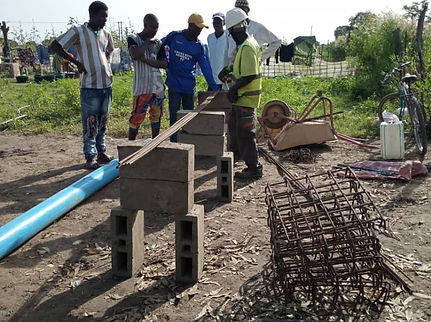
The water derived from a drilled well system comes from aquifers beneath multiple layers of rock shelves and at an approximate elevation of +/- 42 meters below the surface. From our initial well project, we recorded that to achieve bringing potable water to the surface, it is a 3–5-day process, in itself, with an additional 12-20 days required to perform follow up activities to connect and bury water lines, build distribution stations, assemble the solar grid and bring the project to a fully functioning water distribution system. After which, the new well system is tested for its performance, and any deficiencies are resolved - all the while, the actual water undergoes a rigorous series of laboratory tests before the system is released to the end users for their use and consumption of the water. Having direct access to potable water within 75 feet of their home in lieu of walking 2.5 to 3 miles- one way- and hand carrying water vessels to procure water from a public source is a modern-day game changer- on top of the health benefits to all user age groups! With the inaugural well system now completed and in full use, the remaining well projects are now prepared to be funded, implemented, and fully completed as soon as funding can be procured!
The USCGD developed and holds the design for this water system that, by simple but modern-day ingenuity, is fully expandable to allow for a community’s potential needs should the community continue to expand. The system utilizes a solar grid- specifically designed for each system- to power the well’s electric pump that brings water to the surface, among the many moving parts that the system is comprised of. Given that these water distribution systems are “gifted” to rural communities, the daily and periodic upkeep and repair are the responsibility of the community which has been gifted with a potable water distribution system. Terms of the agreed to and fully understood “contracts” with the community leaders as end users are qualified before drilling equipment lands on the community property. These community leaders receive their instruction on the workings of the well system, its maintenance, and repair by their regional water authority in a partnering effort with the NDMA. Leaders are also educated on how to collect revenue from within their community who are taught by our team to manage and maintain their new water system, the use of the banking system for funds storage and distribution, and in hiring and funding professional well repair services if the need arises. This administrative addition to the implementation of the water system itself is now proven to be an effort and experience that elevates the community’s overall quality of daily life- while creating no bio-hazards and leaving behind a zero-carbon footprint. Our well system is truly a technological breakthrough for these remote regions in The Gambia, and it brings a 21st Century approach and solution to an otherwise primitive rural way of life. The USCGD feels confident in our water system, and managing the funds and physical construction operations required to bring these water projects to reality! Our system has been developed to ensure the success and longevity of each project well into the future.
Finally, the inaugural implementation of the USCGD’s Water Distribution System in the Sinchu Maggai community located 179 km from Banjul/Serekunda did not come without occasional mechanical and geological difficulty. But through the perseverance, support, and professional developmental experience of our team, and in conjunction with our chosen Contractor, every adversity was conquered, and we have no doubts, that with your financial support, we will be as successful on Municipal Well Distribution Systems 2 through 10.
The USCGD is thankful for YOUR personal support in helping our organization to effectively elevate the quality of life of those in rural Gambia whose lives cannot be elevated unless we intervene.
.jpeg)